what does it mean to rewire a truck
left right 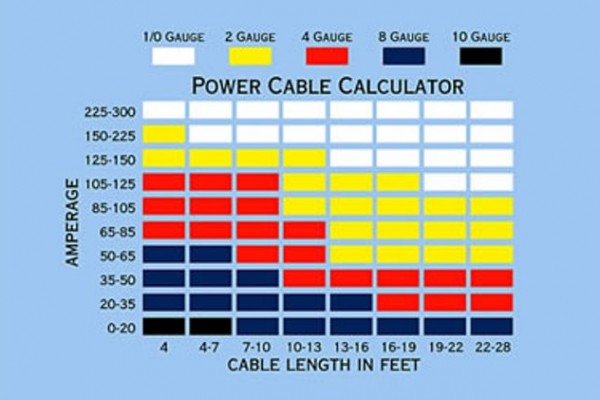



Cars are filled with stuff that can make or pause performance. The engine needs to exist fed the proper amounts of air, fuel, and spark. The suspension and brakes must be in tip-summit shape. The wheels and tires, transmission, cooling organisation, gauges—fifty-fifty the seats—must all function properly.
With all those things to worry about, many enthusiasts overlook the electrical wiring organization. A lousy wiring job will proceed your electric accessories from operating at total potential—and that ways subpar operation.
Many people are intimidated past the prospect of wiring a vehicle. But a proper wiring job doesn't have to be a scary job—we've put together a few tips to aid brand the job a niggling bit smoother.
Circular Up The Right Tools
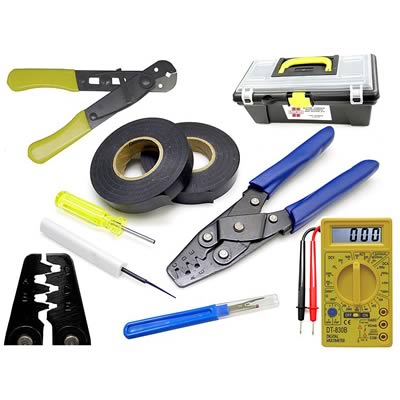
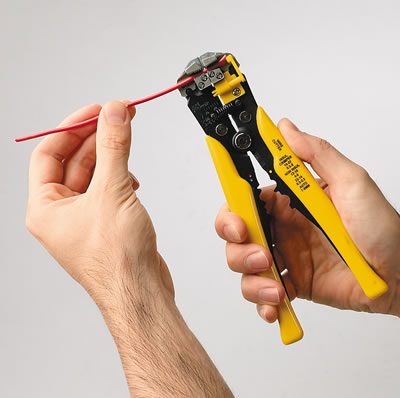
The proper tools will make your wiring chore a whole lot easier. Start with a quality set up of wire strippers. Wire strippers more often than not include a group of holes to fit nigh wire gauges. This allows you lot to strip the insulation off your wires without accidentally cut into the wire conductors.
A good wire crimper is necessary when you install solderless connectors. Most quality crimpers have 2 or three sections on the nose to fit various lug sizes. You tin even get crimpers with wire cut and wire stripping sections.
A soldering atomic number 26 is a must for splicing wires or securing oversized connectors that cannot exist crimped. You will need solder designed specifically for electronics and wiring . It has a midly activated rosin core flux to make clean the wire every bit it is beingness heated, removing oxidation and lite corrosion. That allows you to solder with less heat, making the connections stronger with less electrical resistance.
Here are some other items that should be in your electrical toolbox:
- A wire brush for removing heavy corrosion, oil, or grease before soldering
- A volt/ohm meter to measure voltage and resistance levels in your circuits
- A test lite to exam for ability within a excursion
- Shrink tubing to insulate connections from outside elements. The tubing slides over the connector or solder joint and permanently shrinks when heated
Guess Your Wiring Needs
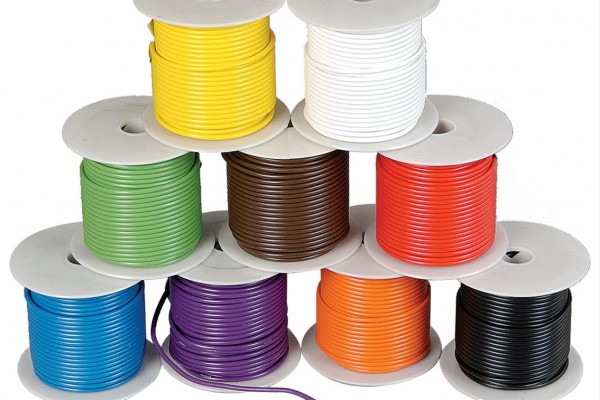
A factory wiring harness includes the necessary wiring for standard electrical components like windshield wipers, horn, headlights, etc. However, when you add together electrical or electronic components to your vehicle, like high-terminate sound or racing electronics, y'all need to choose the proper wire on your ain. In that location are three factors to consider: size, cloth, and color.
Wire size is measured by gauge—the smaller the judge number, the larger the wire. The guess yous demand depends on the electric current draw of the accompaniment and the wire length betwixt the accessory and the power source. In general, the larger the current describe, the larger gauge wire you need to properly power the accessory.
Wire Guess to Wire Diameter Comparison Chart
| Wire Gauge (AWG) | Wire Diameter (Inches) |
|---|---|
| 4-0 | 0.460 |
| 3-0 | 0.409 |
| 2-0 | 0.364 |
| 0 | 0.329 |
| one | 0.289 |
| half-dozen | 0.162 |
| 8 | 0.128 |
| 10 | 0.101 |
| 12 | 0.081 |
| 14 | 0.064 |
| 16 | 0.050 |
One factor to consider with long lengths of wire is voltage drop. The longer the wire, the greater the voltage drib. You can offset voltage drop by increasing the size of the wire. As a rule of thumb, endeavour to maintain a less than .5% voltage drop to assure maximum performance.
Wire material is commonly aluminum or copper. For automotive purposes, we recommend stranded copper wire for the greatest flexibility and conductivity.
Wire colour may not seem of import at first glance, simply it becomes crucial when you try to trace a faulty circuit downward the road. To keep yourself from tearing your hair out, color-code your wire past accompaniment. It will help yous go on rail of which wire goes where during installation and troubleshooting.
Make the Connection
At that place are two main types of connectors: soldered and solderless. Soldered connectors are necessary with oversized wiring or if you're splicing wires together. Solderess, or crimp, connectors can be used for most other wiring, and we'd recommend using them wherever possible.
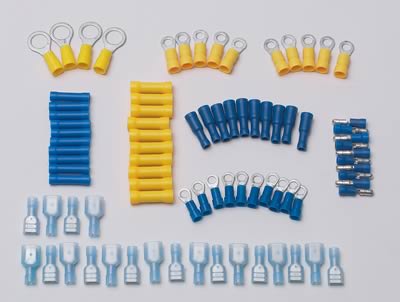
Solderless connectors are the easiest to apply and provide a practiced, strong connection. Usually, solderless connectors come with color-coded insulators, so you know which guess wire they are designed for. Solderless connectors come in a variety of configurations:
Butt connectors are shaped similar cylinders and are ideal for joining two wire ends together. A wire end is inserted into each finish of the connector, which is crimped to complete the connexion.
Spade connectors are ideal for components that are removed or serviced ofttimes. A male connector on one terminate of the wire fits into a female person connector on the other end of the wire, completing the connection. To disconnect, only pull the connectors apart.
Band connectors are used to secure wire to screw-type terminals; they are secured by the terminal spiral.
When installing any blazon of connector—soldered or solderless—it is a good idea to use compress tubing. Compress tubing is relatively easy to install and provides added protection against electric shorts and exterior elements.
Choose the Right Components
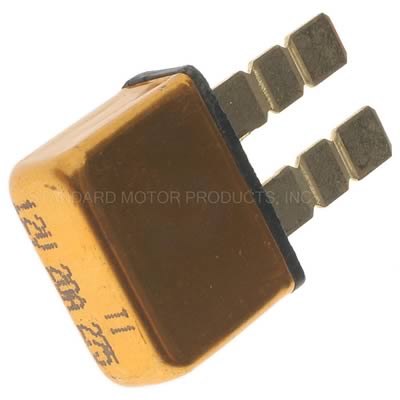
There is more to wiring a vehicle than, well, wire. For case, you will demand some sort of overload protection to protect your expensive electronics. The three bones types of overload protection are fuses, fusible links, and excursion breakers:
- Fuses are designed to accident when the circuits they protect are fed more power than the fuses are rated for. Fuses are rated by amperage; popular sizes are 3, four, 5, half-dozen, 7.5, 10, 12.5, 15, 20, 25, and 30 amp. Always utilise a fuse rated slightly higher than the accompaniment. For example, if an electric fan is rated at 19.5 amps, utilize a 25 amp fuse.
- Fusible links are another option. They are special wires made from an alloy with a lower melting point than regular copper wire. The link is spliced inline with an accessory's power wire. In the consequence of an electrical overload the link will cook, preventing power from reaching the protected accessory.
- A circuit breaker volition switch off ability to the protected accompaniment in an overload state of affairs. When the overload has been corrected, the circuit breaker is reset. Excursion breakers come in manual reset and automatic reset versions, and in the aforementioned popular amperage ratings as fuses.
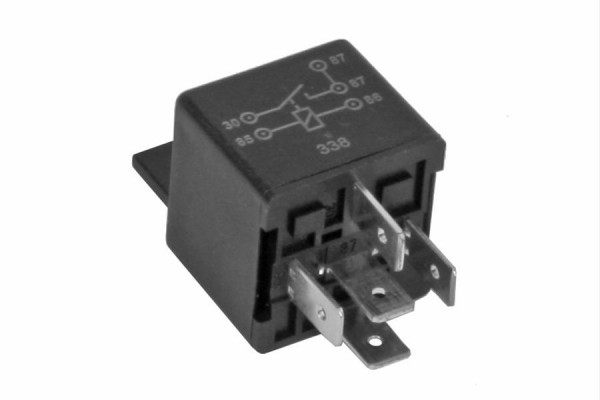
You lot should also install relays with your wiring if your electrical accessories require a bigger current draw than a standard ability switch is rated to handle. And since most switches are designed to piece of work with very limited currents, relays are required just about every fourth dimension to wire a new aftermarket electrical accompaniment.

Relays are extremely useful for handling high-amperage electric accessories like large electric fans, fuel pumps, and HID headlights. They are activated by an electric coil and controlled past a switch. When the relay is closed, no power goes to the accessory in question. When you lot flip the accompaniment switch, an electric scroll in the relay opens, sending power to the accessory.
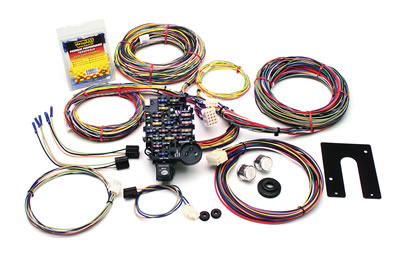
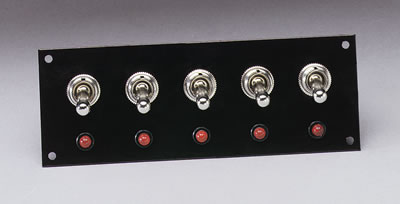
There are plenty of other products to make your wiring tasks easier, including switch panels, multi-circuit main and auxiliary fuse blocks, toggle, push-button, and remote-mount switches, and of course, wiring harnesses for everything from fog lights and gauges to consummate vehicles.
Map Out a Plan
Before you brainstorm your wiring projection, map out a program. Lay out the wiring or wiring harness so you know where each wire goes and that you have enough wire to consummate the job. Locate the fuse box in an like shooting fish in a barrel to reach location like your glove compartment or center panel. Place the necessary relays, fusible link, or circuit breakers at connections between your power source and your electric accessory.
If the wiring isn't labeled already, label each wire or harness with the name of the components they route to. If the wiring or harness will be going through the firewall, use a grommet in the hole then the sheetmetal won't cutting through the wires. Don't secure the connectors until the wiring is through the firewall.
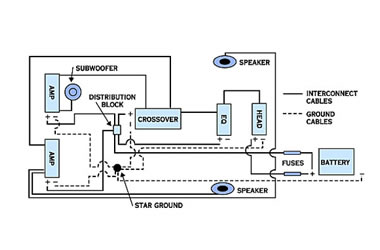
Cull a spot on or near the firewall for the common ground point for the harness, and one point for a chassis ground on the negative side of the vehicle. This method gives you a single path to the negative side of the vehicle and provides a more effective ground. Use ten guess or bigger wire to connect the mutual ground to your chassis footing.
Take your fourth dimension, stay organized, remain at-home, and you'll be a wiring wizard earlier you lot know it!
Source: https://www.onallcylinders.com/2013/12/05/wiring-101-basic-tips-tricks-tools-wiring-vehicle/
0 Response to "what does it mean to rewire a truck"
Post a Comment